
From Financial Literacy to Financial Independence
September 15, 2026
Women’s economic empowerment is increasingly recognised as an important driver of stronger households, businesses and communities in Kenya. While access to financial services has expanded significantly, the challenge is ensuring that women can turn financial access into sustainable income, business growth and greater economic independence. According to the latest Kenya National Bureau of Statistics (KNBS) Economic Survey, 79% of women reported owning a bank or mobile-money account, while 40.6% reported saving money. However, significant gaps remain, particularly for women in rural and underserved communities. This highlights an important reality: financial inclusion is not simply about having an account, but about having the knowledge, resources and opportunities to improve one’s financial wellbeing.
Financial literacy provides women with the knowledge to budget, save, borrow responsibly and plan for the future. However, knowledge alone cannot overcome limited income, lack of capital or restricted access to markets. For a woman running a small business, meaningful economic empowerment may require several forms of support at the same time: financial education, savings opportunities, access to appropriate financing, entrepreneurship skills, mentorship and connections to reliable markets. This integrated approach is increasingly reflected in Kenya’s financial inclusion agenda. Initiatives such as the WE Finance Code, launched in 2025, seek to improve access to finance for women, particularly women-led micro, small and medium enterprises.
Access to finance becomes more meaningful when women can use it to participate in productive economic activities. Recent initiatives supporting women in value chains demonstrate the importance of connecting financial services with real market opportunities. In Samburu, for example, efforts to improve working capital for women involved in the gum arabic value chain are helping women strengthen their participation in a local economic activity while supporting household needs.
Such approaches demonstrate that empowerment is not only about providing loans or training. It is about creating pathways through which women can earn, grow and sustain income. Economic independence also requires the ability to withstand unexpected shocks. Health emergencies, climate-related challenges, rising costs and interruptions to business can quickly undermine household finances and small enterprises. Women therefore need access to tools that support not only income generation but also savings, risk management, financial planning and resilience.
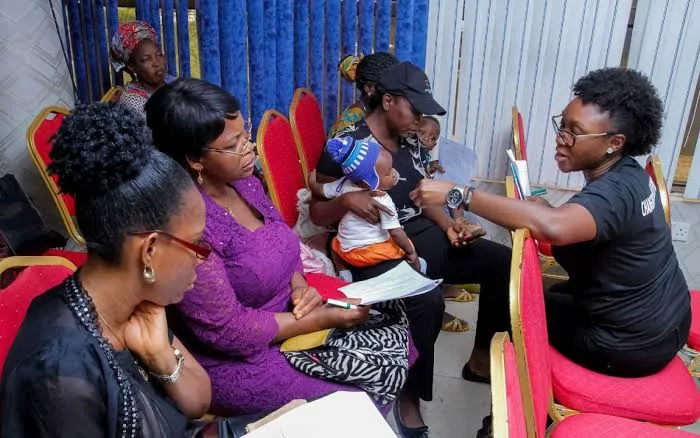
For community organisations, this creates an opportunity to provide practical support that responds to women’s everyday economic realities. Salama Self Help Foundation’s focus on financial literacy and savings, entrepreneurship development and business support is closely aligned with this changing landscape. By equipping women with practical financial knowledge while supporting entrepreneurship and sustainable livelihoods, community-based organisations can help bridge the gap between financial inclusion and genuine economic independence.
The goal should be to move beyond simply asking whether women have access to financial services. The more important question is whether that access enables them to build assets, grow businesses, increase income and withstand financial shocks. For Kenyan women, the journey from financial literacy to financial independence requires more than knowledge. It requires access to finance, savings, skills, markets, mentorship and opportunities to build sustainable livelihoods. When women are economically empowered, the benefits extend beyond individual households. Stronger women-led businesses can create employment, strengthen local economies and contribute to more resilient communities.
Financial literacy may be the starting point, but financial independence is the goal.
